
Wheat Program
Legacy Acre Wheat Profitability Program
Reduce Inputs.Improve Nutrient Efficiency.Build More Profit Per Acre.
Legacy Acre works with wheat growers to reduce purchased inputs, use the nitrogen they already pay for more efficiently, recover fertility already present in the field, strengthen the biological system and capture additional financial opportunities.

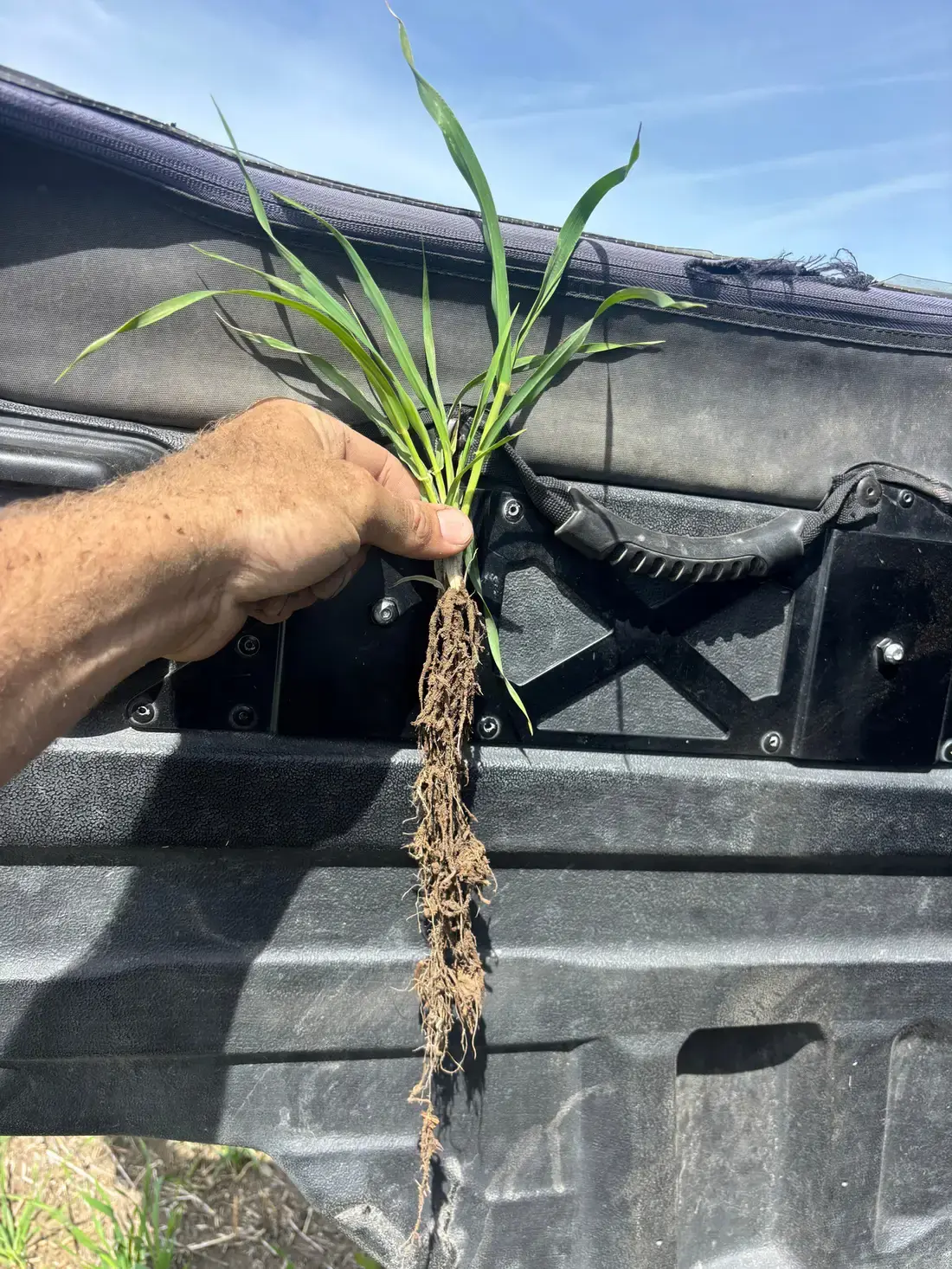
Designed forSpring Wheat · Winter Wheat
Also applies toOats · Rye · TriticaleRelated crops may have smaller expected returns.
The Legacy Acre Approach
More Than an Input Program
Legacy Acre is a farm profitability platform built around a simple question:
Where can we improve profit per acre without sacrificing farm performance?
Rather than selling a single product, we build a program around the crop, the farm's existing fertility plan, soil conditions, acres, equipment and financial goals.
- 01
Improve Input Efficiency
Nitrogen, phosphorus, potassium and starter strategy
- 02
Build the Root & Biological System
Root-zone and fungal biology
- 03
Recover Existing Nutrients
Crop residue and soil fertility
- 04
Reduce Purchased Inputs
Turn biological efficiency into financial return
Wheat Program Options
Build the Right Program for Your Acres
Three program levels, priced per acre. Each one is built around your fields before anything is applied.
Margin Builder
$10 / acre
Improve N Efficiency
Designed for farms looking to improve N efficiency and generate an immediate return from input savings.
Reduction targets
- 30% Nitrogen Reduction
- 30% Herbicide Reduction
Modeled net return
$5–30/ac
before yield and soil improvement1,000+ acres
Additional value available through our financial programs, including potential tax credits. $15–35/ac
Most Popular Profit Builder
$20 / acre
Maximize Year-1 ROI
Designed to maximize input savings while beginning to address long-term soil health.
Reduction targets
- 50% Nitrogen Reduction
- 30% Herbicide Reduction
- 30% Phosphorus Reduction
- 15% Potassium Reduction
Modeled net return
$10–60/ac
before yield and soil improvement1,000+ acres
Additional value available through our financial programs, including potential tax credits. $15–35/ac
Included support
Agronomy recommendations, financial recommendations, soil health planning and risk mitigation.
Legacy Builder
$50 / acre
Full Farm Optimization
Designed for farms looking for the highest level of input optimization, yield improvement, soil health and long-term profitability.
Reduction targets
- 70% Nitrogen Reduction
- 70% Phosphorus Reduction
- 30% Herbicide Reduction
- 15% Potassium Reduction
Modeled net return
$5–60/ac
with potential yield/premium and soil improvement+ Protein Value Opportunity
1,000+ acres
Additional value available through our financial programs, including potential tax credits. $15–35/ac
Included support
Agronomy recommendations, financial recommendations, soil health planning and risk mitigation.
Included training
Agronomy & Financial Webinar Series
Reduction percentages are program targets, not universal guarantees. Final recommendations are adjusted for soil tests, existing fertility, yield goals, crop history and field conditions.
Wheat Results From the Field
What Growers Are Seeing
Real operations, real fields. Open any result to read the full case study.
Lee P. · Montana
5,000-acre winter wheat, spring crop and barley operation
“I was able to cut about half of our nitrogen costs, and we were still able to achieve really good yields with good quality.”
- Less N than that yield conventionally needed (120 → ~15–20 units)
- ~80%
- Consistent spring wheat; some fields 100 bu/ac
- 60+ bu/ac
- Spring wheat protein
- 14%+
- Net return
- $80–100/ac
Sam A. · Montana
12,000-acre wheat, barley, lentil, hay and flax operation
NITRO across a dryland rotation, plus R&D tax credits documented from the same on-farm trials.
- Lentil net profit, no synthetic nitrogen
- +$120/ac
- Flax yield with NITRO in a dry season
- +7–8 bu/ac
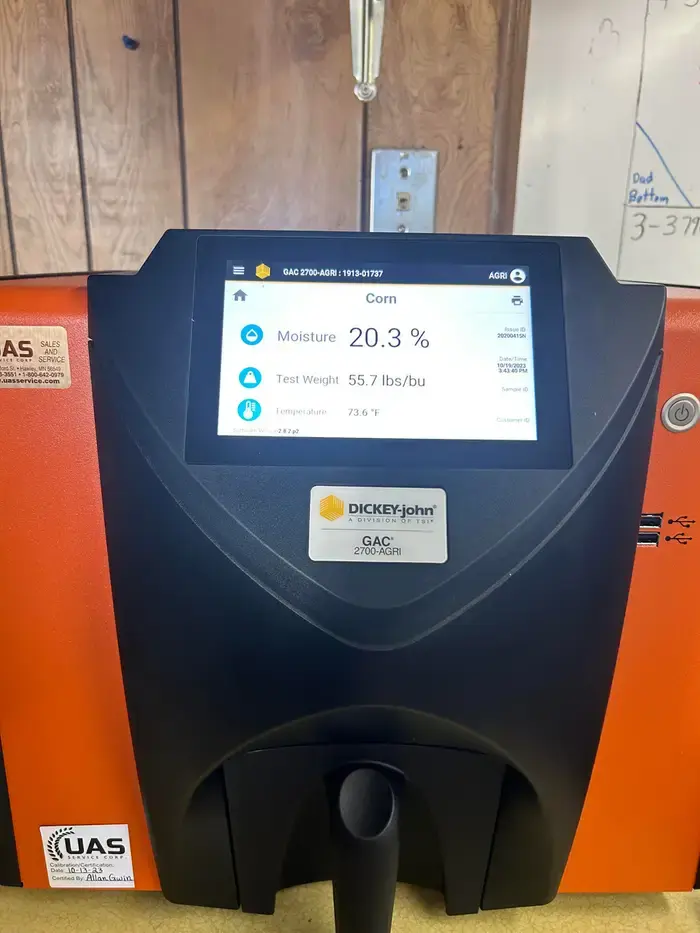
Tracy M. · North Dakota
3,500-acre corn and wheat operation
Cut nitrogen in half and kept yield level with the full-rate fields.
- Less nitrogen: 240 → 120 lb N/ac
- 50%
- Nitrogen cost savings
- $50/ac
- Yield maintained
- Equal
- Grain test weight
- +3%
See what these results could look like on your acres.
Find My Farm Profit OpportunityProtocols Used in the Wheat Program
The Tools Behind the Program
The program tiers aren't simply different quantities of the same product. Each protocol performs a different job in the farm system.
 NITRO
Nitrogen Reduction Protocol
Use Nitrogen More Efficiently
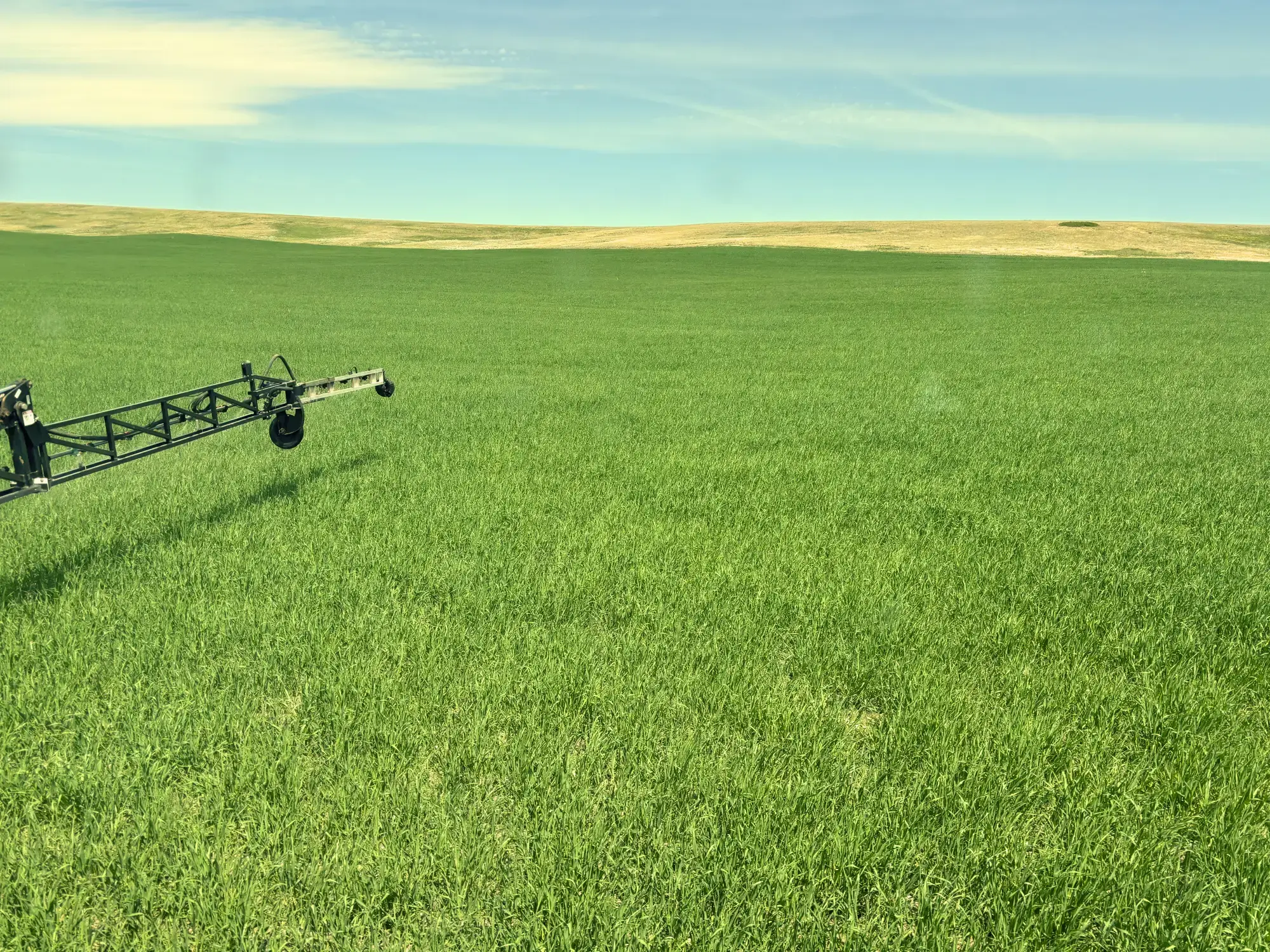
On wheat, NITRO supplies part of the crop's nitrogen as a foliar application while the crop is actively demanding it, so less purchased nitrogen is lost before uptake.
Typical winter wheat program: a 20 gal/ac seasonal program split between coming out of dormancy and about three weeks later, customized to the farm.
Explore NITRO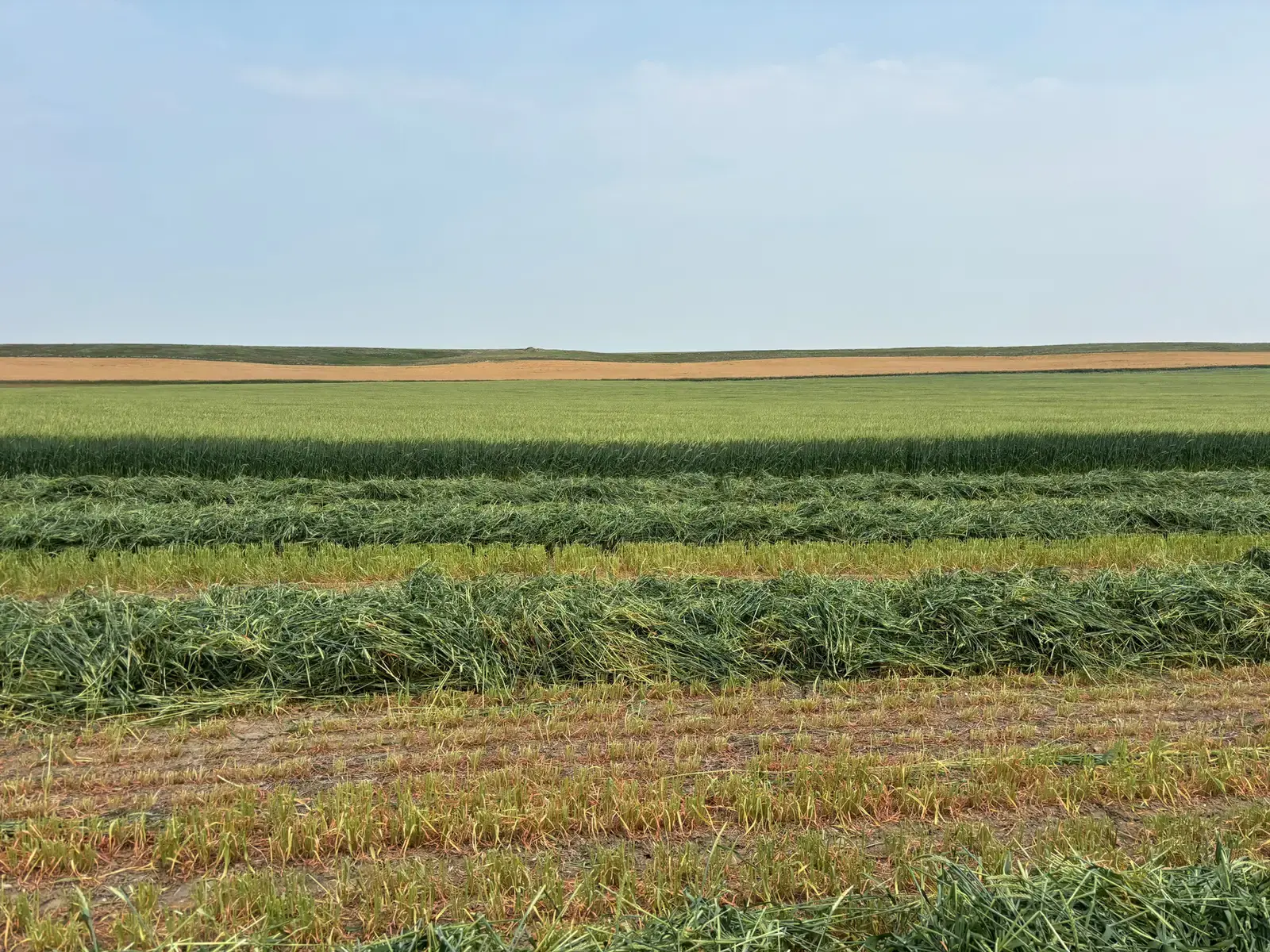 Decomposer
 Protocol
Turn Crop Residue Into a Fertility Resource
Wheat is a high-fit Decomposer crop. Its residue holds nitrogen, phosphorus and other nutrients the next crop can use once biology breaks it down.
Explore Decomposer- Seed Treatment
Seed Treatment & Root-Zone Biology
Build the Biological System From the Seed Out
Root establishment and fungal and bacterial root-zone biology from the very start of the crop.
- Root development
- Nutrient access
- Biological diversity
- Early crop establishment
Financial Programs
Capture Value Beyond the Crop
Input reduction is only one way Legacy Acre works to improve farm profitability.
Through Legacy Acre's financial programs and Newbreak, qualifying farms can also evaluate tax credits, incentive programs and other financial opportunities that may create additional value from work already happening on the farm.
R&D Tax Credits
Identify and document potentially qualifying on-farm experimentation and improvement activities.
Financial Incentives
Evaluate available programs that may support qualifying farm investments and practices.
Documentation & Measurement
Build the field-level records needed to substantiate results and applicable financial programs.
How the Program Works
Let's Build the Numbers for Your Farm
- Step 1
Review Your Acres
Crop, fields, rotations and current input program.
- Step 2
Identify the Opportunity
Nitrogen, phosphorus, starter, residue, root-zone biology and financial programs.
- Step 3
Build Your Farm Program
Select the right Legacy Acre program and protocols for the fields.
- Step 4
Measure What Happens
Track planned vs. actual inputs, applications, yield and financial results throughout the season.

Find Your Farm Profit Opportunity
Tell us about your operation and we'll start running the numbers.
Qualify My FarmTalk With Our Team
Prefer a conversation first? Reach the Legacy Acre team directly.
(619) 370-8283 admin@legacyacre.com